
Introduction: A Silent War for Technological Supremacy
In a world where technological advancement dictates global power, an invisible yet decisive conflict is reshaping the balance of influence between nations. This is not a conventional war fought with weapons, but a strategic struggle over silicon, algorithms, and industrial dominance.
Dubbed by analysts as “The Tech Heist of the Century” or “China’s Path to Technological Independence”, this silent battle revolves around one of the most complex machines ever built—an innovation so critical that it underpins artificial intelligence, modern defense systems, and the digital economy itself.
At the center of this confrontation stands a single technology long believed to be beyond China’s reach.
The Crown Jewel of Modern Technology: ASML’s EUV Lithography
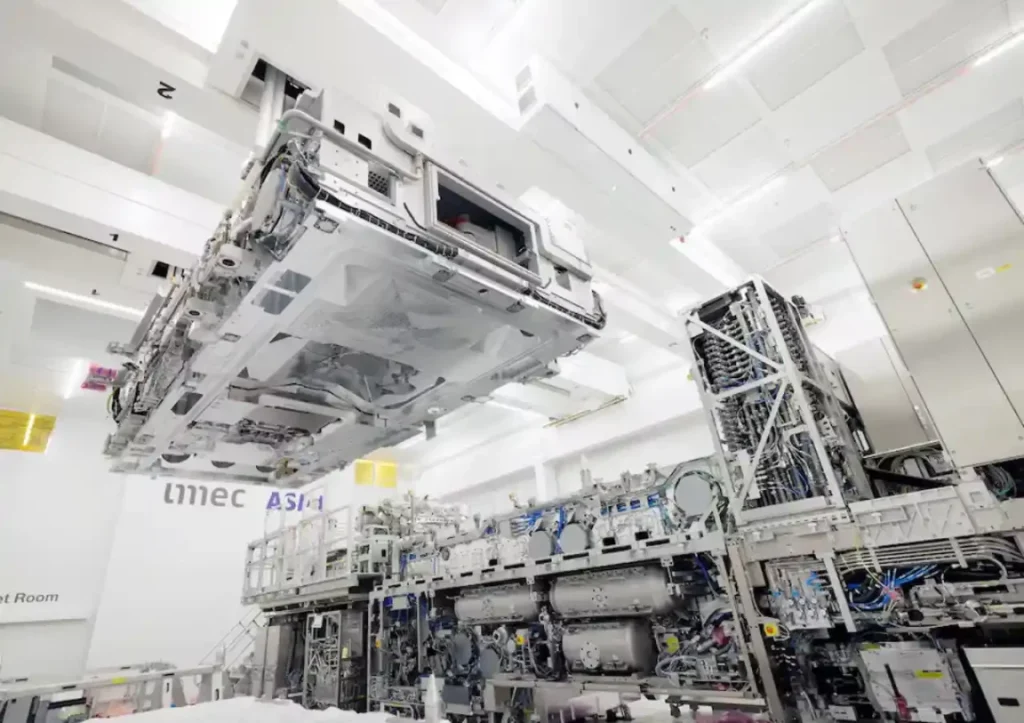
At the heart of advanced semiconductor manufacturing lies Extreme Ultraviolet (EUV) lithography, a process essential for producing chips at 5 nanometers and below.
Today, only one company in the world is capable of manufacturing these machines: the Dutch firm ASML.
Each EUV system:
- Costs more than $250 million
- Weighs approximately 180 tons
- Requires components sourced from multiple allied nations
According to ASML’s Extreme Ultraviolet (EUV) lithography systems, these machines are the backbone of advanced chip production worldwide.
Without EUV lithography:
- Artificial intelligence accelerators cannot exist
- Advanced smartphones and supercomputers become impossible
- Precision-guided weapons and modern military systems lose their edge
This monopoly has been a cornerstone of Western technological and military superiority for more than a decade.
The Assumption That Failed: “China Needs Decades”
For years, Western intelligence agencies and industry experts maintained that China would require several decades to independently develop EUV technology—if it could achieve it at all.
That assumption was fundamentally challenged in early 2025, when the existence of a secret Chinese EUV program was revealed, according to a Reuters investigation into China’s semiconductor ambitions.
The project was reportedly located in Shenzhen and operated under strict military-grade secrecy, with direct oversight from Ding Xiu, a close associate of President Xi Jinping.
China’s EUV “Monster”: Bigger, Rougher, and Functional
Unlike ASML’s compact and ultra-refined design, China’s approach was radically different.
Unable to replicate the extreme miniaturization and precision of Western systems, Chinese engineers opted for:
- Larger-scale architecture
- Redundant mechanical systems
- A brute-force engineering philosophy
The result was a machine occupying an entire factory floor, capable of generating extreme ultraviolet radiation sufficient for advanced lithography processes.
Internally, the initiative was reportedly named “Project Minhat”, an intentional reference to the Manhattan Project—signaling the project’s strategic importance rather than its commercial intent.
Talent Repatriation: The Human Engine Behind the Breakthrough
Technology does not move without expertise.
China’s breakthrough was driven in large part by an aggressive talent repatriation strategy, targeting expatriate engineers who had previously worked within:
- ASML and its suppliers
- Advanced optics laboratories
- Plasma physics and semiconductor research centers
According to multiple intelligence assessments, these engineers returned to China under strict security arrangements. In exchange, Beijing reportedly offered:
- Annual compensation reaching $700,000
- Luxury housing and long-term benefits
- Full legal and institutional protection
Western governments describe these practices as industrial espionage, while Chinese officials frame them as the legitimate return of national talent.
Bypassing Sanctions: Innovation Under Constraint
As U.S. pressure intensified, China faced increasing difficulty in accessing critical components.
Following new U.S. semiconductor export controls, Beijing adopted a highly adaptive strategy:
- Acquiring legacy and obsolete equipment through intermediaries
- Purchasing machinery via public auctions and third-party platforms
- Reverse-engineering outdated systems to create domestic alternatives
These efforts allowed China to bypass supply-chain bottlenecks while remaining formally compliant with international restrictions.
Timeline: How Close Is China to EUV Chip Production?
Initial Western forecasts placed China’s EUV capability well beyond 2035.
Current assessments suggest:
- Prototype completed: 2025
- Pilot chip production: Targeted for 2028
- Industrial-scale output: Around 2030
In strategic terms, this timeline significantly narrows the technological gap between China and the West.
Global Repercussions: A New Technological Cold War?
This development has triggered alarm across Washington, Brussels, and Tokyo.
According to the Semiconductor Industry Association, EUV access remains the single most critical bottleneck in advanced chip manufacturing.
Security analysts from the Center for Strategic and International Studies (CSIS) warn that semiconductor dominance is now inseparable from national security, military readiness, and geopolitical leverage.
For ASML and Dutch intelligence services, the emergence of Project Minhat represents a major security breach with long-term implications for global technology governance.
Conclusion: Engineering Will as a Strategic Weapon
China’s EUV breakthrough is more than a technological milestone—it is a strategic declaration.
By combining state-backed investment, human capital repatriation, and relentless engineering effort, Beijing has demonstrated that technological embargoes can delay progress, but not permanently prevent it.
The world now faces a critical question:
- Will this race usher in a new golden age of innovation?
- Or will it entrench a new Cold War, fought not with missiles, but with microchips?
One reality is clear:
The future of global technology will no longer be shaped by a single monopoly.
🔗 Further Reading & Practical Resources
For readers interested in how technological sovereignty also depends on skills, education, and developer expertise, we recommend the following in-depth guide:
👉 How to Learn Coding Effectively in 2026: Best Practices, Tools, and Mindset
This article explores modern learning strategies, emerging programming tools, and the competencies required to thrive in an AI-driven global economy.