
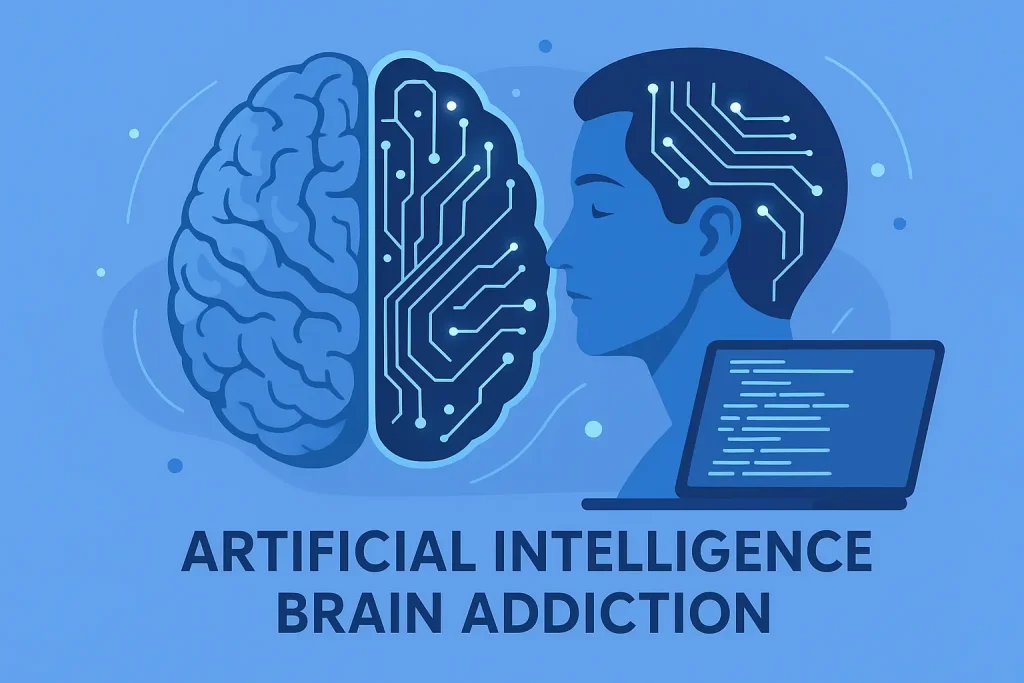
The rise of artificial intelligence brain addiction is becoming a real concern. AI tools are now used for everyday tasks—from writing school essays to planning trips or comparing bank offers—allowing people to outsource mental effort that previously engaged their own cognitive abilities. But what happens to our brain when we rely too much on AI?
Thinking With or Without AI: The Risk of Brain Addiction
A 2025 study by the MIT Media Lab examined three groups writing short texts. One group relied only on their brain, the second used Google, and the third relied on ChatGPT.
The results were alarming:
- Over 80% of AI users could not recall parts of their own text.
- AI-assisted writing reduced cognitive activity compared to those who used only their brain.
- Prolonged use of generative AI created “cognitive debt”, making independent problem-solving harder.
Long-Term Cognitive Debt from Artificial Intelligence
Philosopher Eric Sadin, in his book The Desert of Ourselves, warns that AI is replacing fundamental human faculties, like language production. At UNESCO, he called for a “civilizational fight against AI.”
Paul Valéry reminds us: “The lion is made of assimilated sheep.” True intellectual strength comes from engaging with ideas, not just relying on AI-generated responses.
The Future of Our Minds and AI Brain Addiction
While AI brings efficiency and convenience, excessive reliance can lead to artificial intelligence brain addiction. Moderation, conscious use, and mental exercises can help preserve natural problem-solving abilities.
Related Posts (Internal Links):